
Self-Adhesive or Plain Elastomeric Insulation? Applications, Installation, and Cost
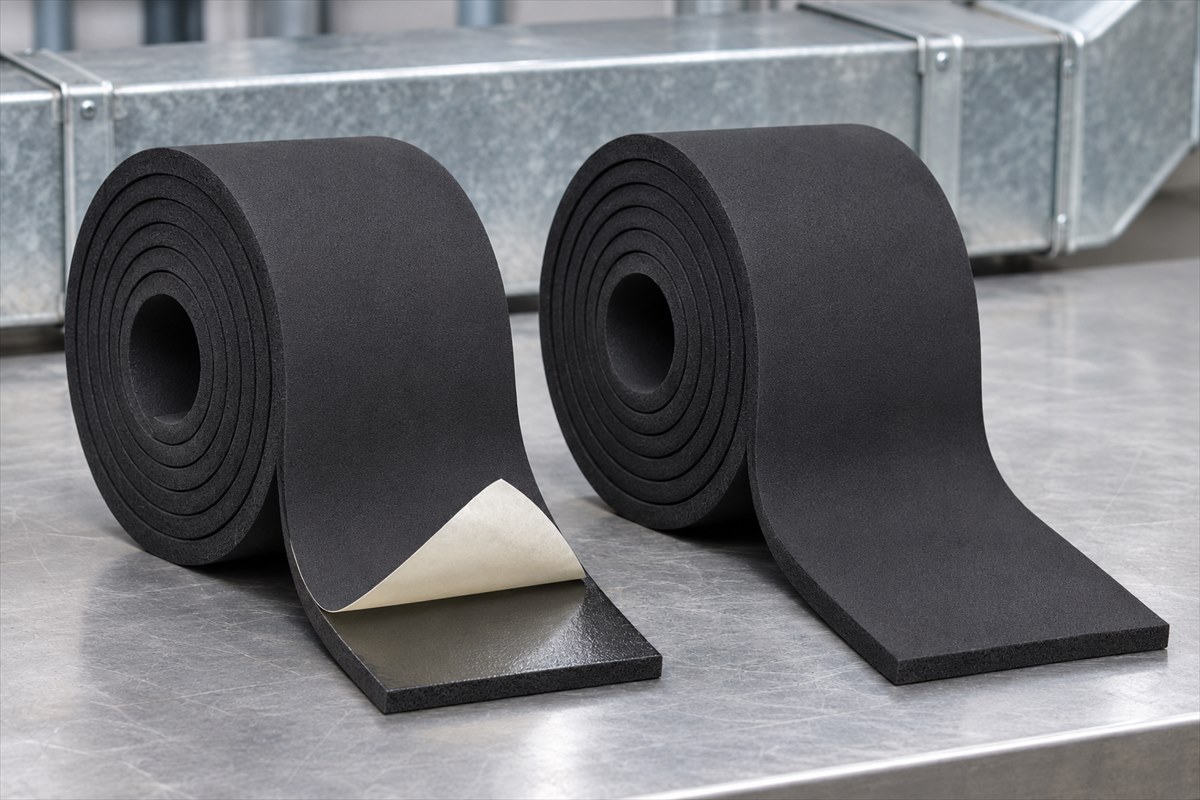
If you are choosing between self-adhesive and plain elastomeric insulation for air ducts or HVAC equipment, here is the short answer. Self-adhesive insulation can speed up work on large, accessible surfaces. Plain insulation is installed with a compatible adhesive and can give installers more control over some details. The right choice depends on the shape of the surface, site conditions, the product’s installation instructions, and the total installed cost. An adhesive backing by itself does not guarantee better insulation performance, and the seams still need to be sealed.
This guide compares the two types of roll insulation, where each works well, and what to check before ordering for a project.
What Is the Difference Between Plain and Self-Adhesive Elastomeric Insulation?
Plain elastomeric roll insulation has no factory-applied adhesive backing. To bond it to the surface, use an adhesive that the manufacturer approves for that insulation and that substrate. Self-adhesive rolls come with a factory-applied adhesive layer. Peel away the release liner and apply the insulation to the prepared surface. Clint Veneta’s self-adhesive roll simplifies installation by providing the adhesive on the back of the sheet.
This difference mainly affects how the insulation bonds to the surface. To compare thermal performance or resistance to water vapor, look at the thickness, thermal conductivity, technical specifications, and installation quality of the two products you are considering. An adhesive backing does not replace calculating the required thickness or sealing the joints.
| Criterion | Self-adhesive roll | Plain roll |
|---|---|---|
| Bonding to the surface | Factory-applied adhesive backing | Compatible adhesive applied as specified for the product |
| Preparation time | Usually reduces the steps needed to apply adhesive to the surface | Allow time to prepare and apply the adhesive |
| Repositioning during installation | Can be difficult once the insulation makes contact and is pressed down | Depends on how the adhesive is applied and its working time |
| Seams between pieces | Close and seal as directed by the manufacturer | Close and seal as directed by the manufacturer |
| Material cost | Compare current prices for the same thickness and dimensions | Include the cost of the required adhesive |
| Installation cost | May reduce labor time on large jobs | Depends on the surface, number of cuts, and adhesive application method |
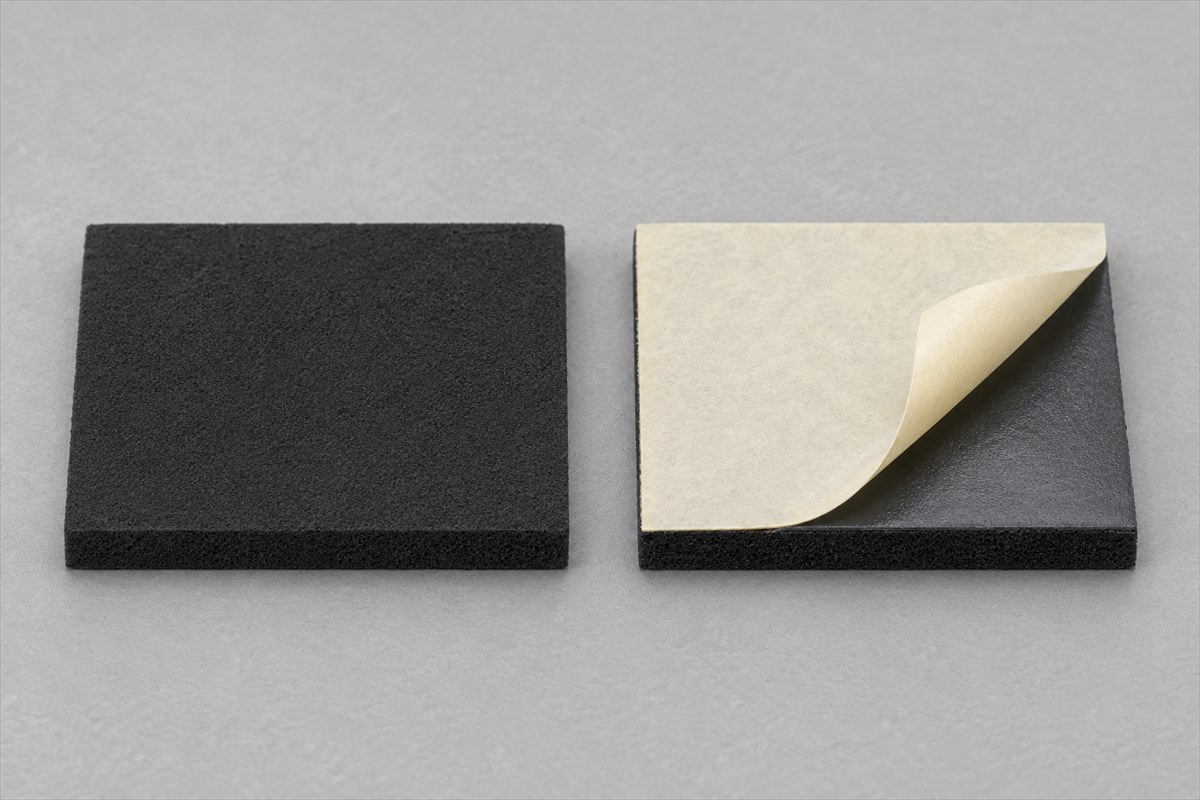
When Is Self-Adhesive Elastomeric Insulation a Good Choice?
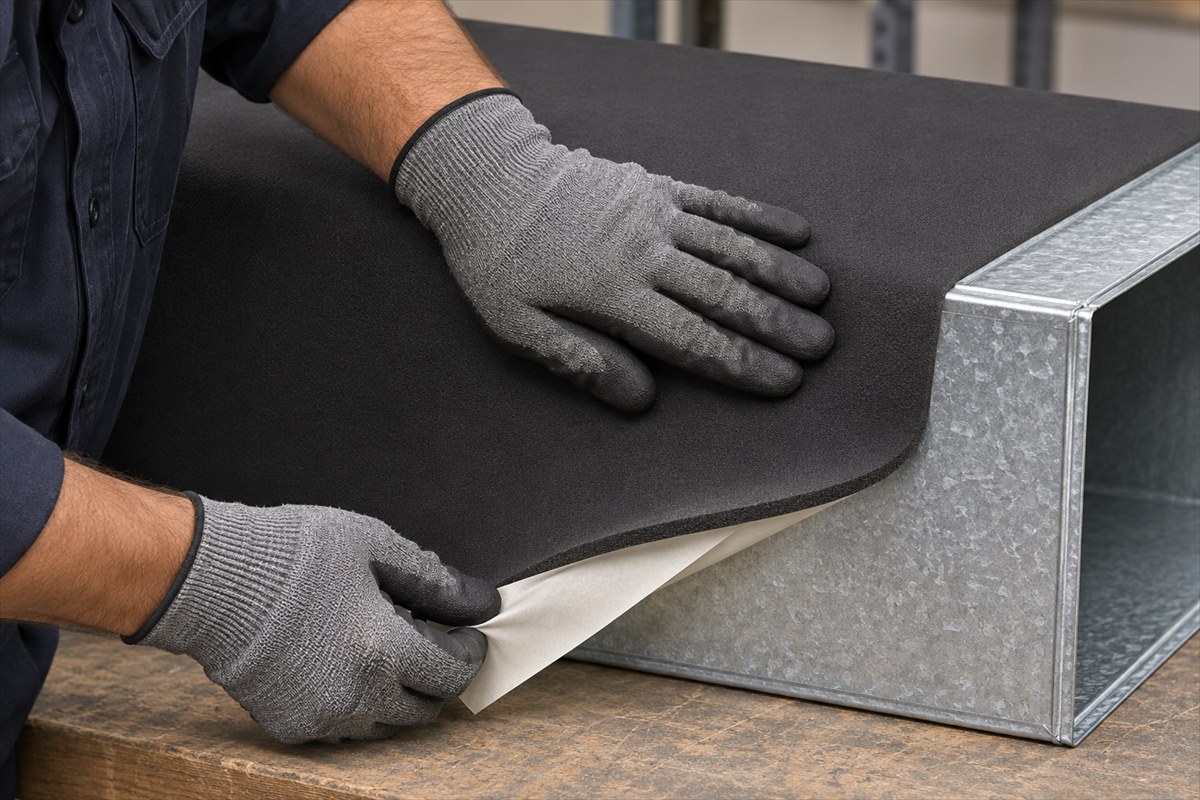
On large, relatively flat surfaces such as the outside of rectangular air ducts, self-adhesive insulation can reduce the number of installation steps. Measure and cut the roll material, clean and dry the surface, then gradually peel away the release liner while pressing the insulation down evenly. Removing the liner a little at a time helps you position the sheet and avoid trapping air. Armacell’s installation tutorial also emphasizes a clean, dry surface, gradual liner removal, and even pressure.
This method is most useful when the area is large, access is easy, and there are few cuts or obstructions. Before ordering, check the specifications for the exact product to confirm that the backing adhesive suits the substrate, application temperature, and service conditions. Backing adhesives vary by brand and model.
Does Self-Adhesive Insulation Still Need Adhesive or Seam Tape?
The adhesive backing bonds the body of the insulation to the surface. Longitudinal seams, joints between pieces, corners, and cut edges need separate attention. On cold air ducts in particular, open seams can let water vapor get under the insulation. Follow the product’s installation instructions when choosing adhesive or tape for the joints. The ArmaFlex application manual, for example, explains that self-adhesive tape alone does not substitute for properly bonding seams.
When Is Plain Elastomeric Roll Insulation a Better Fit?
Plain insulation can suit a project whose installation plan, substrate, or numerous details call for controlled adhesive application, provided the installer has the tools and time to do it. On irregular equipment, around flanges and supports, or on surfaces that need many small pieces, choose the bonding method based on the details of the job. Cutting accuracy, access, and the manufacturer’s instructions determine whether plain insulation is a better fit on complex surfaces.
Clint Veneta lists seven thicknesses for its roll elastomeric insulation: 6, 9, 13, 19, 25, 32, and 50 mm, with widths of 100 and 120 cm. Compare rolls with the same thickness, dimensions, and facing, and check availability for each model. Prices for rolls with different specifications do not make a like-for-like comparison.
Which Type Should You Choose for Air Ducts, Pipes, and Outdoor Equipment?
Indoor Rectangular Air Ducts
Self-adhesive insulation can be a practical choice for large, accessible surfaces. If the duct is complex or the project specifies a particular adhesive application method, plain insulation is also worth considering. For either type, choose the thickness based on the temperature of the air inside the duct, ambient temperature and humidity, condensation risk, and project requirements. Clint Veneta’s guide to choosing insulation thickness explains how these factors affect the choice.
Building Services Piping
If preformed pipe insulation is available in the right size, consider it first. Roll insulation is more often used on large pipes, equipment, or where the right tubular size is unavailable. In those cases, look at the number of seams and how they will be closed when choosing between plain and self-adhesive rolls. Installation speed is one part of that decision.
Outdoor Ducts and Equipment
A self-adhesive backing does not make the insulation resistant to sunlight or rain. Outdoor insulation needs protection suited to UV exposure, weather, and the risk of mechanical damage. Clint Veneta recommends a foil-faced elastomeric roll for outdoor applications. Match the facing and its sealing details to the project conditions and the product specifications.
How Do You Compare Total Installed Cost?
The price per square meter of insulation is only one part of the comparison. Estimate the full project cost using the following components.
Total cost = insulation + adhesive and consumables + installation labor + cutting waste + any rework
On large runs of straightforward ductwork, time saved on applying adhesive may offset the difference in material price. A small job with many cuts and joints may have a different result. Request quotes for both options at the same thickness and coverage area and compare them alongside the contractor’s estimated installation time. The lower-cost option depends on those figures.
Five Installation Details That Affect the Result
- Prepare the substrate. Dust, grease, moisture, rust, and loose coatings can reduce adhesion. Clint Veneta also recommends removing dust before installing its self-adhesive insulation.
- Measure and cut before removing the release liner. Peel back the liner gradually as you position the self-adhesive piece and apply even pressure.
- Plan seam sealing separately. Join edges, corners, and adjacent pieces according to the manufacturer’s instructions. Use the specified treatment at each seam instead of relying on the backing adhesive to seal it.
- Choose thickness independently of the installation method. Temperature, humidity, and dew point still matter with a self-adhesive backing.
- Specify the facing for outdoor work. Before ordering, establish which facing will be used and how its joints and cut edges will be sealed.
Frequently Asked Questions
Is Self-Adhesive Elastomeric Insulation Always Better Than Plain Insulation?
No. Its main advantage is simpler bonding to the surface and potentially shorter installation time. When job details, substrate conditions, or technical requirements differ, compare the two options against the same specifications.
Is Self-Adhesive Insulation Suitable for Air Conditioning Ducts?
It can be suitable for air ducts with a compatible surface. The choice depends on ambient temperature and humidity, the substrate, fire performance requirements, the required thickness, and the method of sealing seams. For outdoor ducts, specify weather and UV protection separately.
Do the Two Types Offer the Same Thermal Performance?
The labels “plain” and “self-adhesive” alone do not tell you how well the insulation performs. Compare the thickness and thermal conductivity on each product’s technical data sheet, along with the quality of the installation.
Does Self-Adhesive Insulation Require Any Liquid Adhesive?
Clint Veneta’s product page does not call for liquid adhesive to bond the main surface of its self-adhesive insulation. Seams, edges, and cut pieces still need to be joined according to the instructions for that product and may require separate materials.
Summary and Ordering Guide
If the priority is fast installation on a large, prepared surface, consider self-adhesive roll insulation. If the bonding method, surface shape, or installation details point to another approach, include plain roll insulation in the estimate. Then compare thickness, technical specifications, facing, and total installed cost.
Before requesting a quote from Clint Veneta, gather the area and dimensions of the duct or equipment, the installation location, ambient temperature and humidity, and the target thickness. Compare the specifications for plain roll insulation and the self-adhesive roll when requesting quotes.