
Best Insulation for HVAC Ducts
Best Insulation for HVAC Ducts
In today’s world, HVAC systems (Heating, Ventilation, and Air Conditioning) play a vital role in comfort and quality of life. One of the most important factors in improving the efficiency of these systems is using proper insulation for ventilation ducts. Choosing the right insulation can reduce energy loss, control moisture, and increase the lifespan of the HVAC system.
In this article, we review the best insulation options for HVAC ducts, along with their advantages and disadvantages, to help you make the best choice for your projects.
Why Is HVAC Duct Insulation Important?
Insulating HVAC ducts is essential for several reasons, including reducing energy costs, controlling temperature, and minimizing noise. In addition, using proper insulation helps prevent moisture buildup and mold growth, which can negatively affect indoor air quality.
Insulation is considered one of the key components in HVAC system design. However, selecting the right insulation based on environmental requirements can make a significant difference in system performance.
Types of Insulation for HVAC Ducts
Below, we examine different types of insulation and their characteristics.
1. Elastomeric Foam Insulation
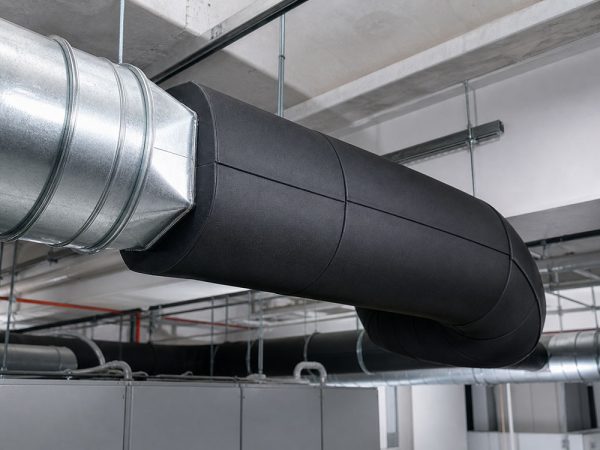
Elastomeric insulation, due to its closed-cell structure, provides excellent resistance against moisture and condensation. This type of insulation is ideal for areas where humidity and temperature control are important.
Advantages:
• Excellent moisture resistance
• Easy and fast installation
• High flexibility for complex surfaces
Disadvantages:
• Higher cost compared to other options
2. Fiberglass Insulation
Fiberglass is one of the oldest and most widely used insulation materials for HVAC systems. It is available in board or roll form and, because of its lower cost, is a good option for many projects.
Advantages:
• Lower cost compared to other insulation types
• Good sound absorption properties
• Effective thermal performance
Disadvantages:
• Sensitive to moisture and reduced performance if exposed to water
• Requires proper covering to prevent fiber damage
3. Rigid Foam Board Insulation
These insulation materials are made from rigid foam materials such as polystyrene or polyurethane foam and offer high R-values. This makes them highly suitable for large ducts and industrial projects.
Advantages:
• Very high thermal resistance
• Suitable for use in large spaces
• Resistant to impact and damage
Disadvantages:
• More difficult installation compared to other options
• Higher cost
How to Choose the Right Insulation?
To choose the proper insulation, you should consider the specific needs of your project. Here are some helpful recommendations:
• For residential and office projects: Fiberglass or elastomeric insulation is recommended because these options are cost-effective and efficient in controlling sound and heat.
• For industrial projects or humid environments: Closed-cell elastomeric foam insulation is the best option because it provides excellent resistance to moisture and condensation.
• For large ducts: Rigid foam insulation or composite panels with higher R-values are more suitable for temperature control and reducing energy loss.
Benefits of Using High-Quality HVAC Insulation
Using high-quality insulation for HVAC ducts can provide the following benefits:
1. Reduced Energy Consumption: Proper insulation minimizes energy loss, resulting in lower energy costs.
2. Moisture Control and Mold Prevention: Moisture-resistant insulation prevents water condensation and mold growth.
3. Longer System Lifespan: Protecting ducts and pipes from temperature fluctuations and moisture increases the service life of HVAC systems.
Conclusion
Ultimately, selecting the best insulation for HVAC ducts depends on the characteristics of each insulation type, such as moisture resistance, cost, R-value, and the specific requirements of the project.
Recommendations:
• For residential and office projects: Fiberglass insulation is suitable because of its lower cost and easy installation.
• For humid or industrial projects: Elastomeric foam insulation is a better choice due to its high moisture resistance.
• For large ducts or projects where R-value is critical: Rigid foam or panel insulation systems are more advanced and effective options.
Contact Us
For consultation and purchasing the best HVAC insulation products, contact us or visit our products page.